How it's made
How one cut gets made
Every cut of NOVA DOCK goes through the same seven steps. Here they are in order — what a person does, what a model does, and where we stop and check.
-
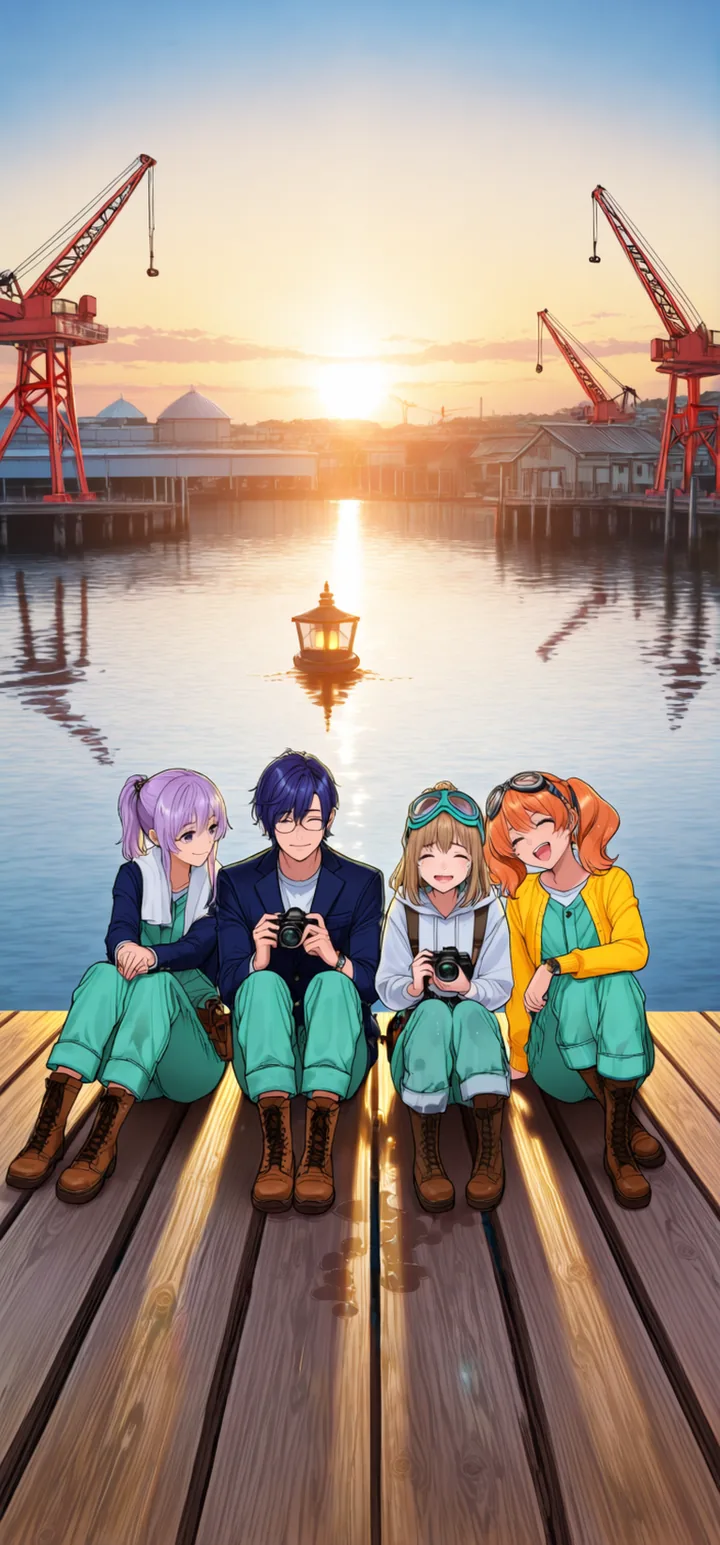 Composition
-
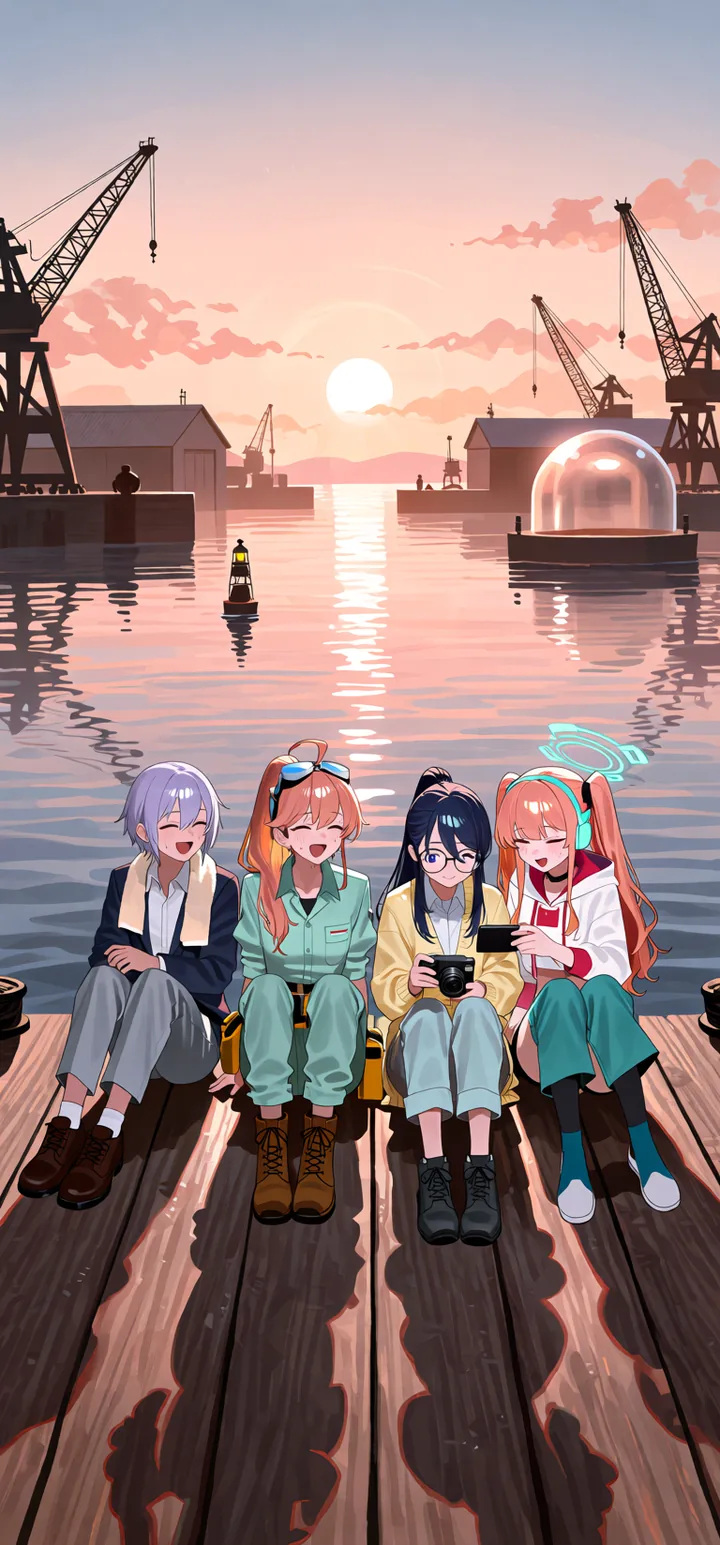 Style
-
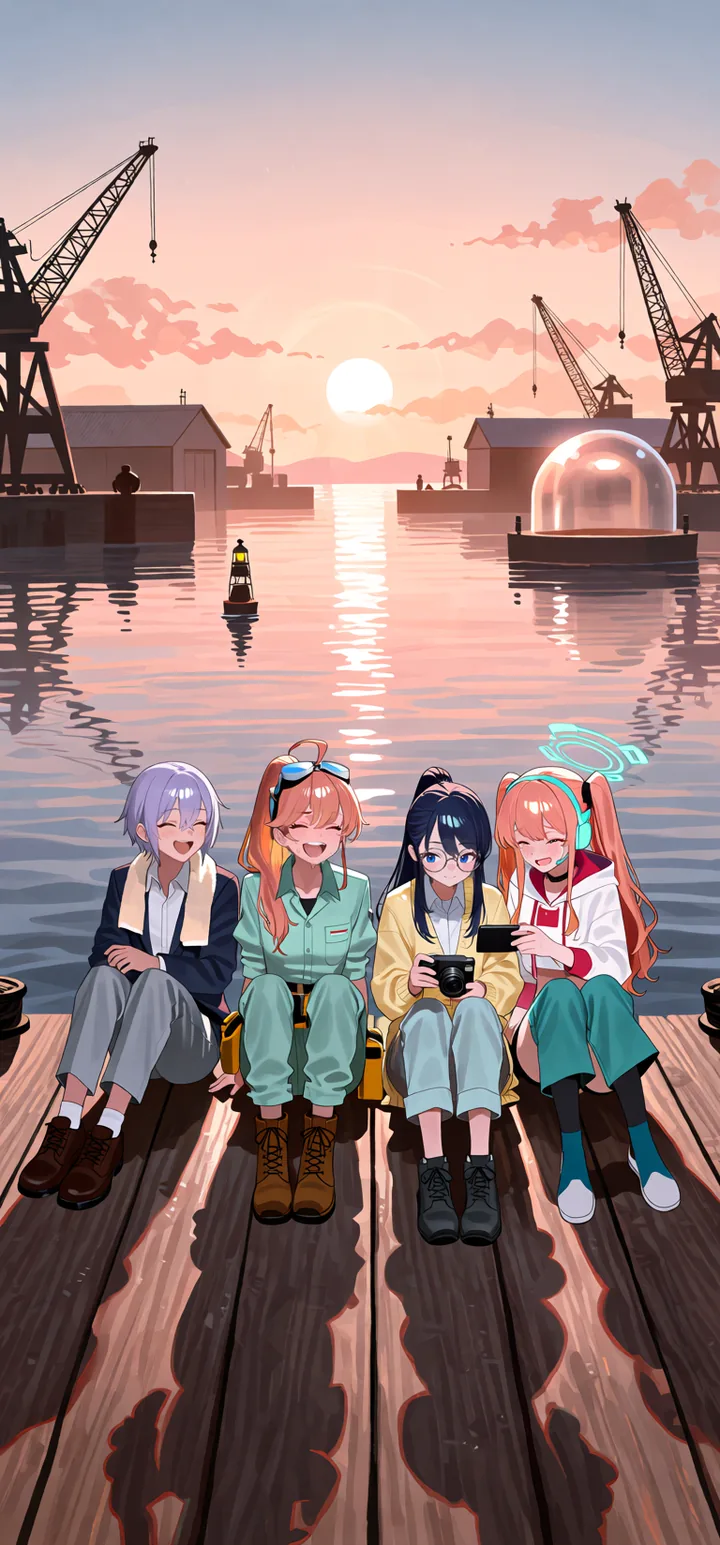 Final
Who does what
A person directs. Models draw.
Story, staging and every judgement call are human. Models generate images at fixed stages, and a person checks what comes out of each one.
Human
What a person does
- Writes the six-cut script and every line of dialogue (EN and KO)
- Draws the storyboard and fixes the cast-lock paragraph
- Writes and checks per-cut prompts with an LLM
- Reviews every expression
- Letters HTML speech bubbles and assembles the page
- Runs the review gate — cuts that fail are regenerated
Model
What a model does
- anima — composition and figure placement
- Krea2 + flat-illustration LoRA — style transfer
- Face redraw — detects faces, redraws each character's expression
- LLM — prompt drafts that a person reviews
Pipeline
Seven steps and one review gate
Each step is tagged with who does it. Steps 4, 5 and 6 produce the A, S and F images (A = composition, S = style, F = final) you'll see in the case study and the matrix below.
- Human
- Human + LLM
- Model
-
Story & script
- Human
A six-cut script, with the dialogue for each cut fixed before any image exists.
- Six cuts: Setup · Incident · Three reactions · Decision · Climax · Resolution
- Every line is written by hand, in English and Korean
OutputSix-cut script + dialogue
-
Storyboard & cast lock
- Human
For each cut: the camera, who is in frame, and what each face shows. Then one fixed description per character that never changes — the cast-lock paragraph.
Cast lock — fixed descriptors
- NOAH24 · leader · short lavender hair · navy blazer
- HARU21 · engineer · peach-brown ponytail · mint jumpsuit · goggles
- RIAN27 · recorder · long navy ponytail · round glasses · butter-yellow cardigan · camera
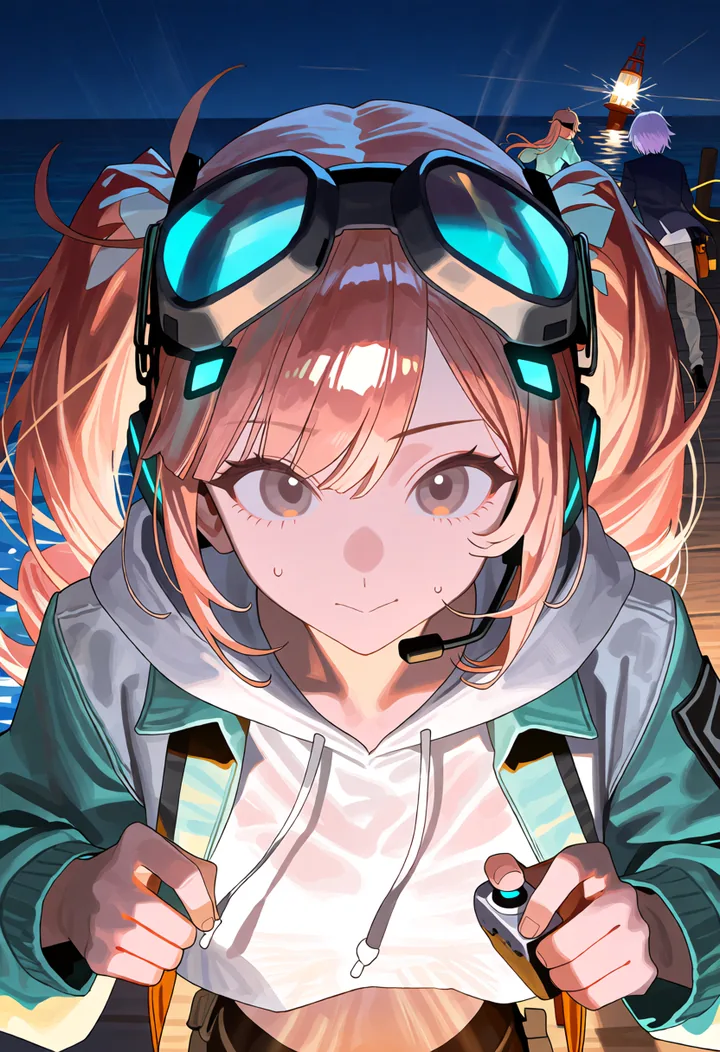
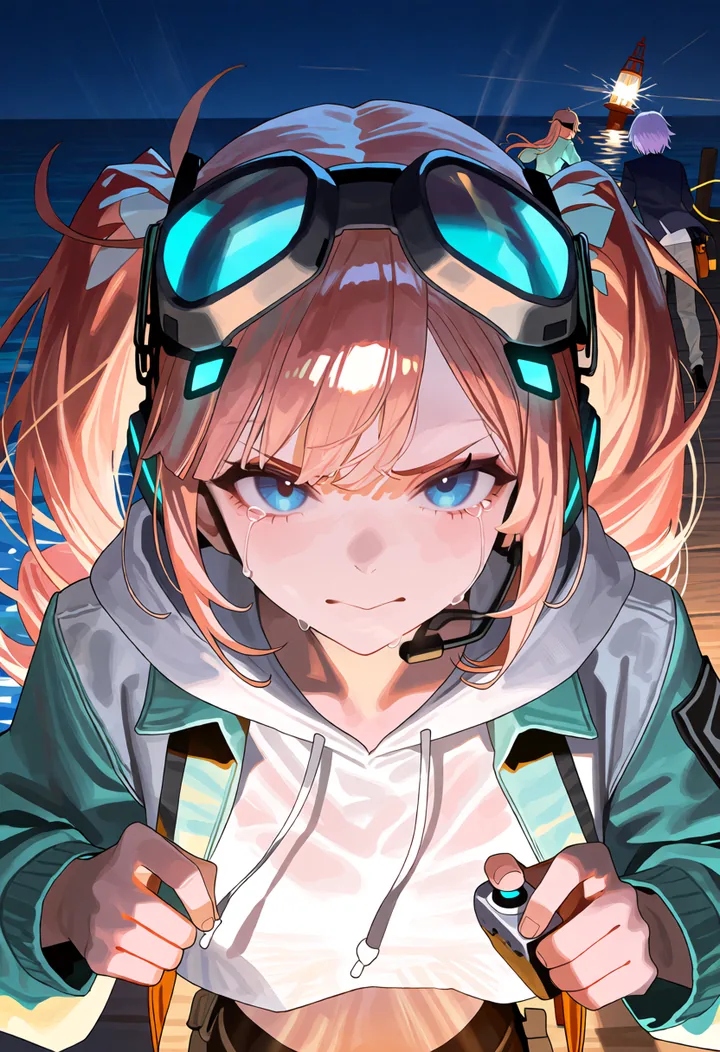
- JUNO20 · avatar · peach twin tails · white cropped hoodie · cyan headset
OutputPer-cut storyboard + cast-lock paragraph
-
Prompting
- Human + LLM
From the storyboard, each cut gets two prompts, written with an LLM and checked by a person.
- Tag prompt — for composition (anima)
- Sentence prompt — for style (Krea2); its first line names who is in frame
- Both carry the exact same cast-lock text
OutputA prompt pair per cut
-
Composition — anima
- Model
anima lays out the cut: camera, framing and where each person stands. The colour is soft and painterly on purpose — this stage is about placement, not finish.
- v7 rule: characters fill at least 40% of the frame height
- Kept only if every character still reads at thumbnail size
OutputStage A image (composition)
-
Style — Krea2
- Model
Krea2 with a flat-illustration LoRA repaints stage A at denoise 0.55 — enough to swap soft paint for flat shapes and clean colour, little enough that the layout survives.
- First line of the style sentence = who is in frame (v7)
- Same cast-lock text as every other stage
OutputStage S image (flat illustration)
-
Faces & expressions
- Model
- Human
- ModelDetects each face, then redraws it per character to that cut's expression target.
- HumanChecks every expression against the script; wrong ones go back for another pass.
- Faces must be big enough to detect — the lesson from v6 Cut 2
OutputStage F image (final art)
-
Lettering & assembly
- Human
Speech bubbles are HTML laid over the image, never painted in — so text stays sharp, editable and switchable between English and Korean.
- Bubbles sit in the top ~20% of each cut, which is kept fairly empty
- Six cuts assembled into one comic page
OutputThe finished comic page
Review gate
- Human
Before anything is published, every cut has to pass three checks. Fail any one and the cut is regenerated.
- Matches the storyboard
- Expressions are right
- Bubbles are readable
Case study
Cut 3 — Three reactions
One cut, three stages. Scroll to watch Cut 3 move from composition to style to final faces.
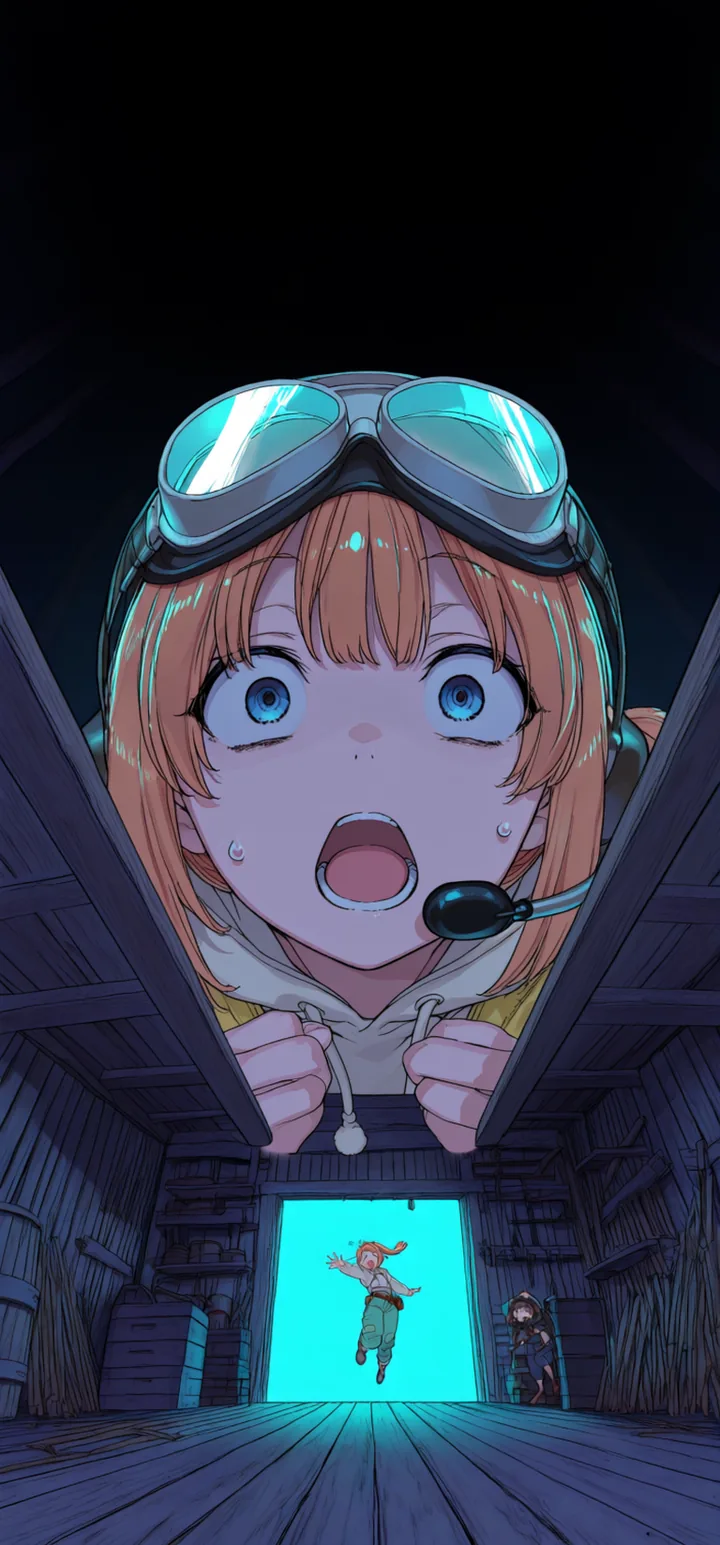
- HARU“Grab it!”
- RIAN“Rolling.”
- JUNO“...I can't move.”
-
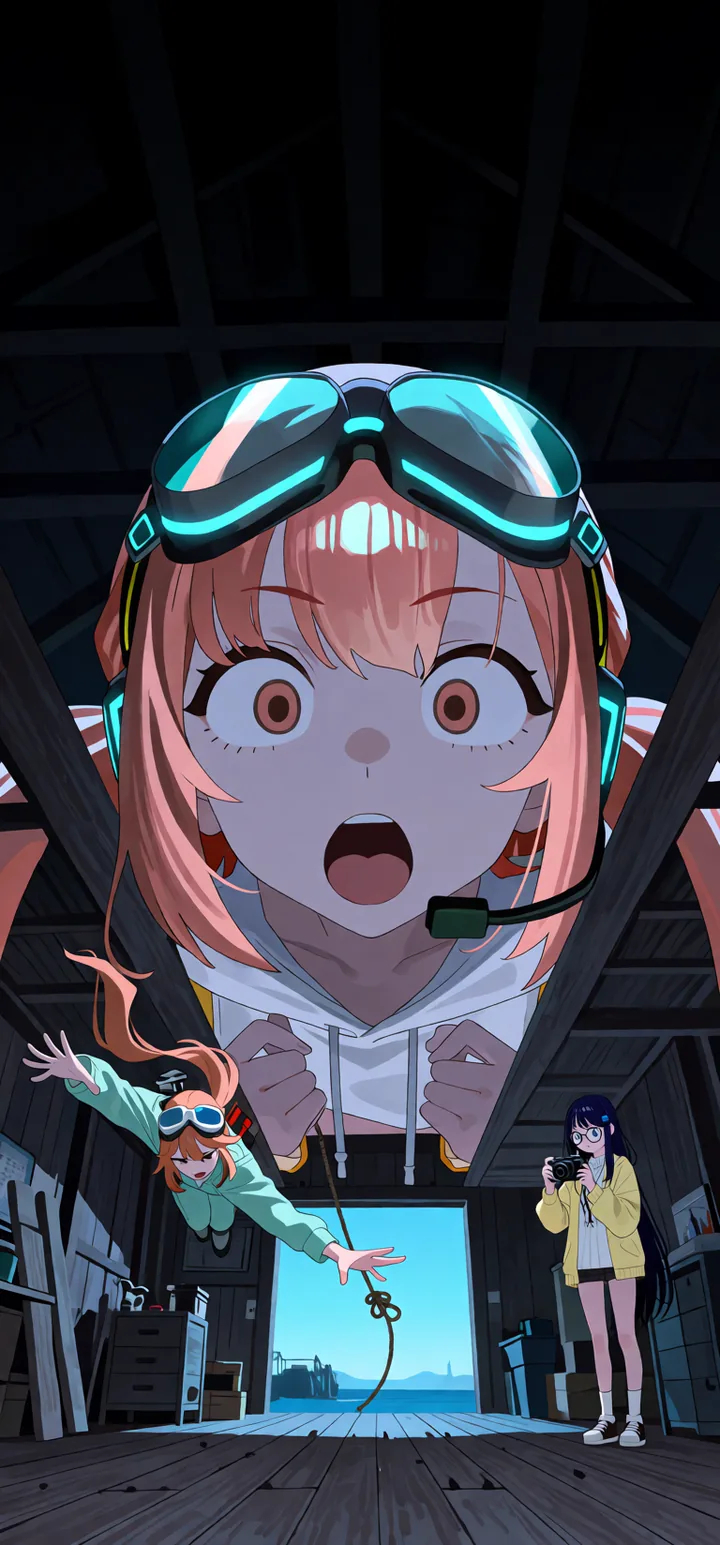
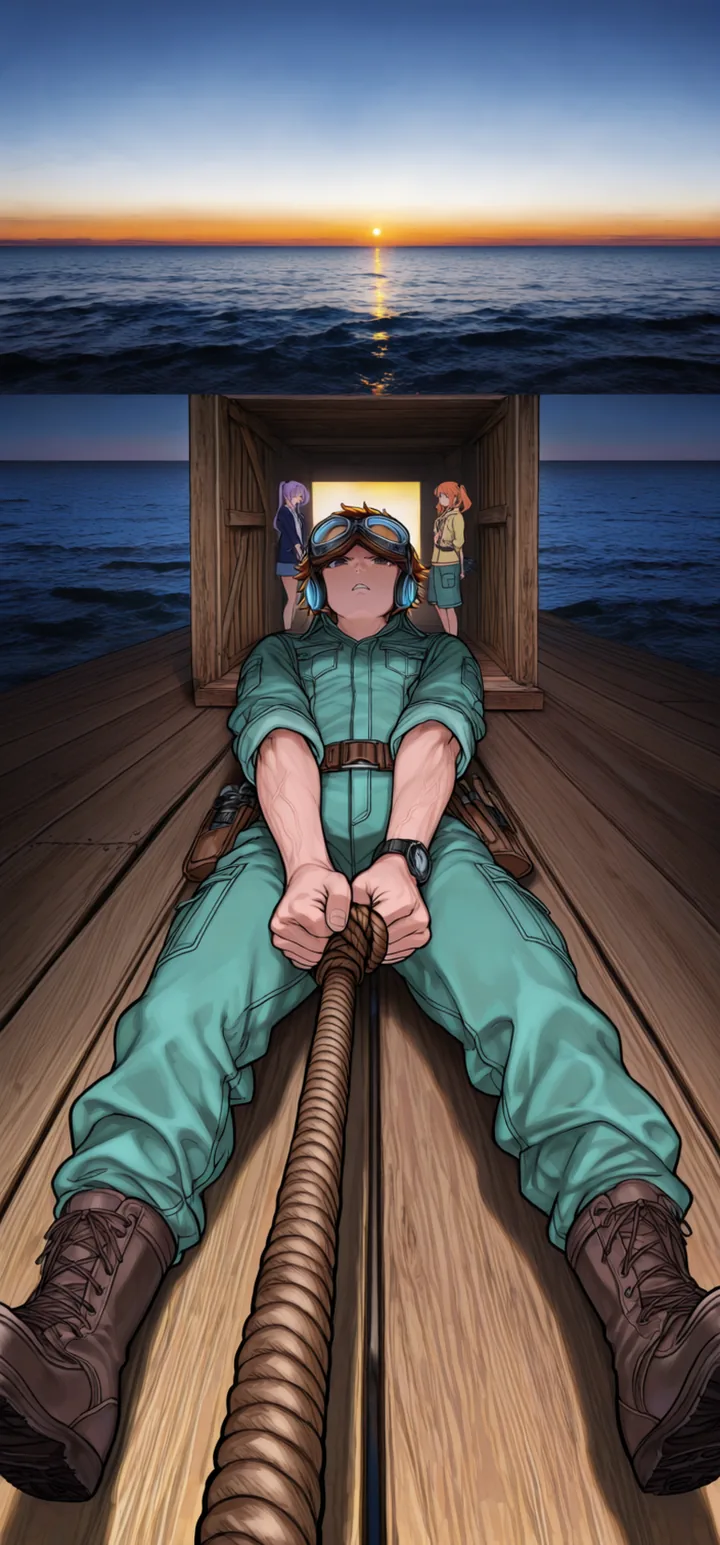
Step 4 · Composition · anima
Three people, three places
anima places the cut: Haru, Rian and Juno each get their own space, with faces big enough to work on later. The blurry paint is intended — at this stage we only judge placement.
- Check: do all three read at thumbnail size?
- Check: is each figure 40%+ of the frame height?
-
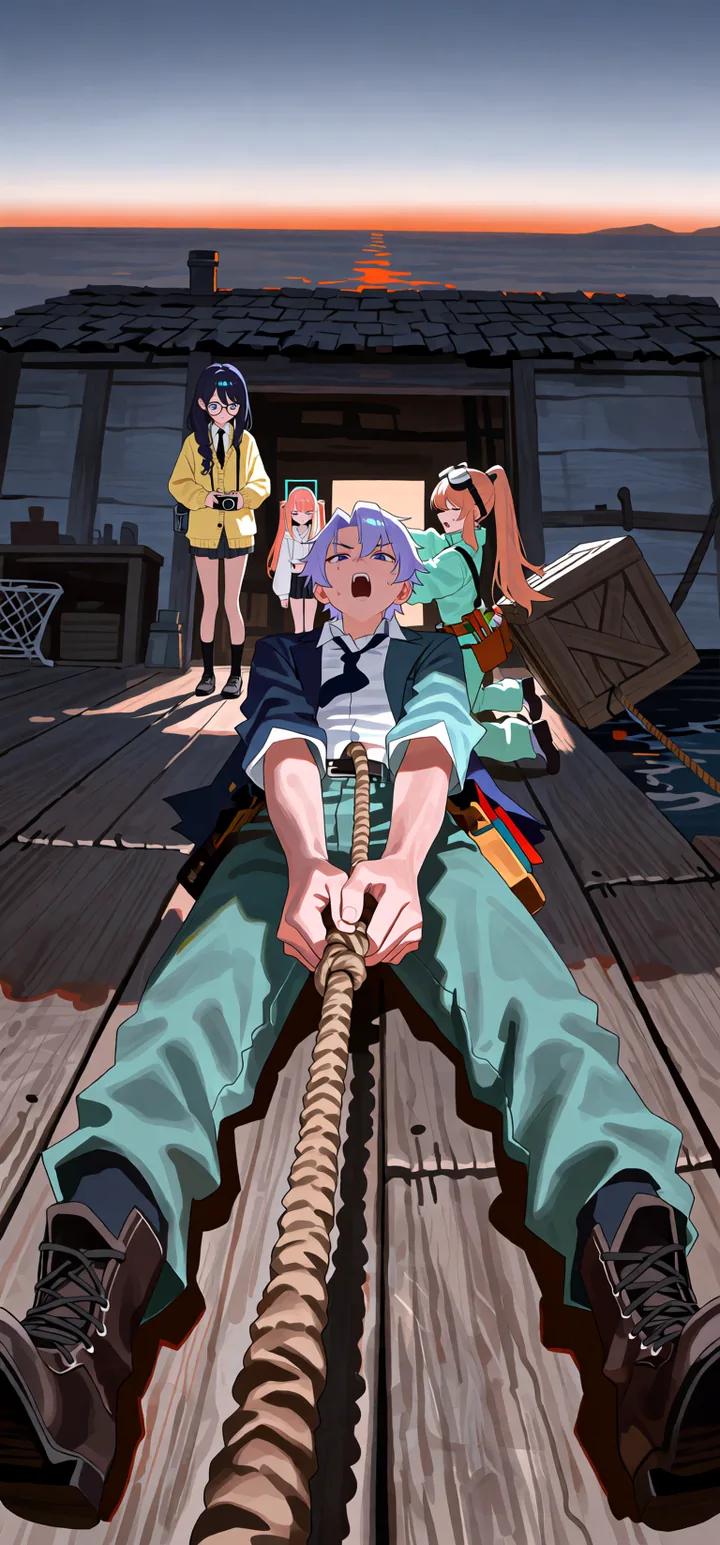
Step 5 · Style · Krea2 + LoRA
Same layout, flat illustration
Krea2 repaints stage A with the flat-illustration LoRA at denoise 0.55. Brushwork becomes flat colour; positions and poses stay put. The style sentence opens by naming all three, so nobody gets painted out.
- Check: are all three still there, in the same places?
- Check: do outfits and hair match the cast lock?
-
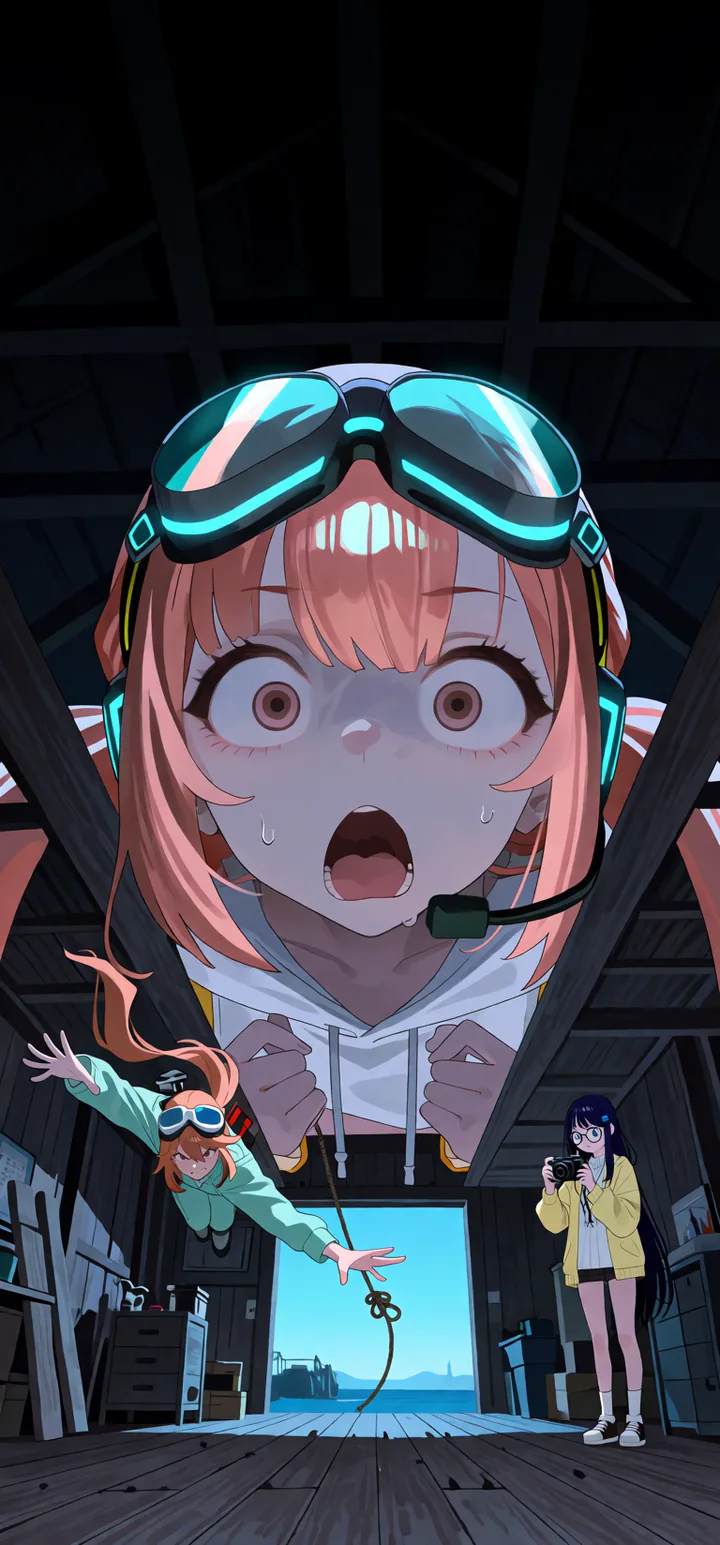
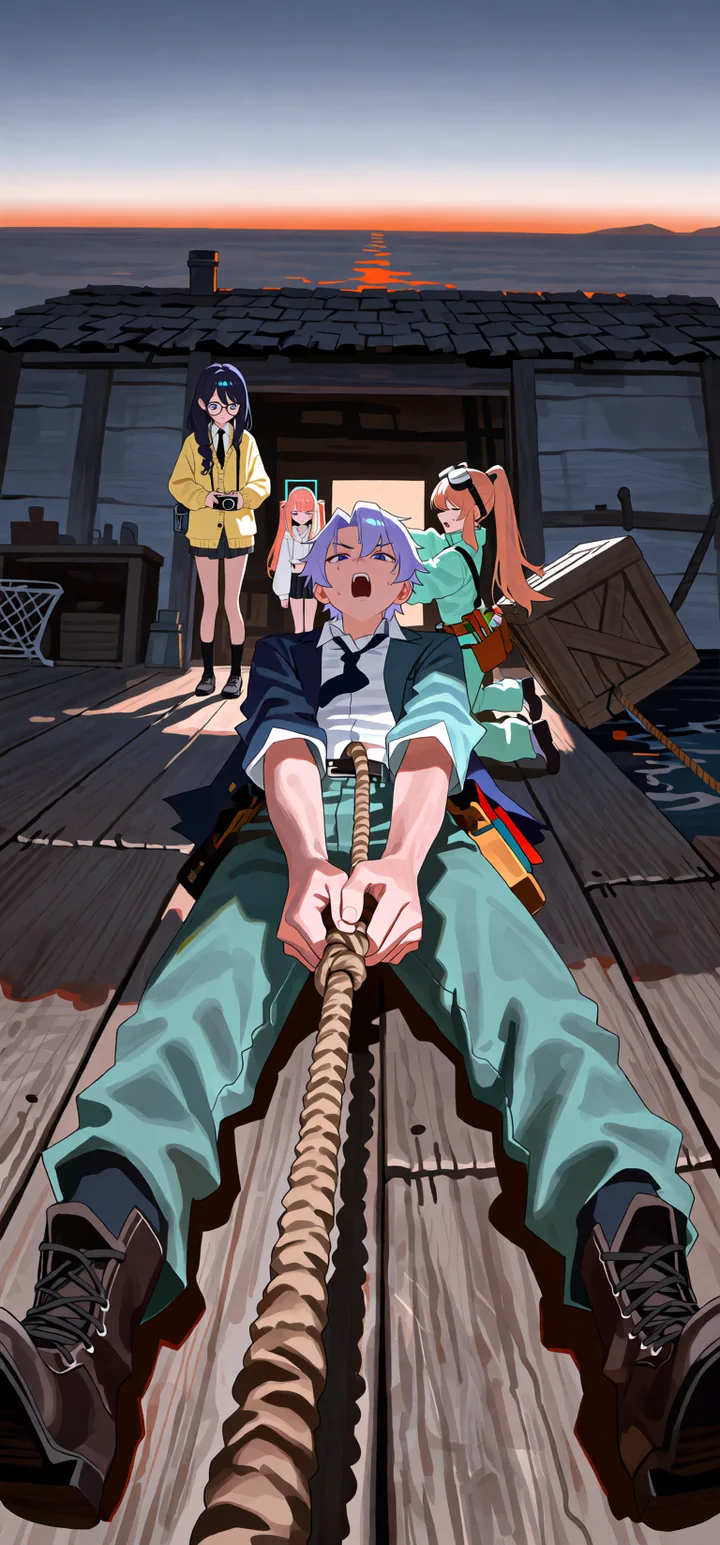
Step 6 · Faces & expressions → final
Three different faces
Each face is detected and redrawn on its own, with a different expression target, so no one's expression bleeds into a neighbour's. A person then checks the faces against the script, and the bubbles go on as HTML.
- HARUstrain
- RIANcold focus
- JUNOpanic
Compare it yourself: stage A vs final
Drag the handle, or focus the slider and use ←/→.
Left: anima composition (A). Right: final after style transfer and face redraw (F).
All six cuts
Six cuts × three stages
Tap any thumbnail to open it full size; inside the viewer, ←/→ steps through all 18 images. Each cut has a one-line summary of its technique notes.
-
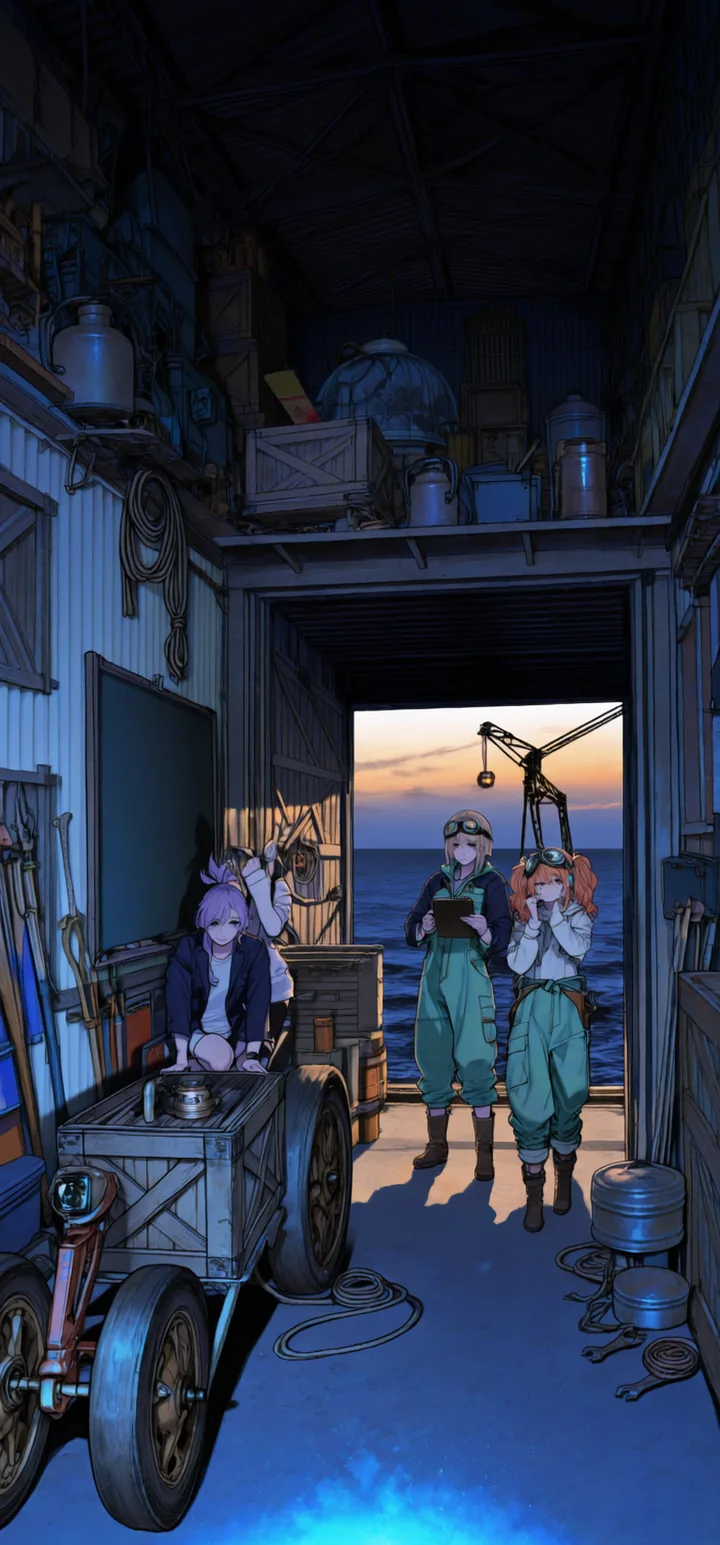
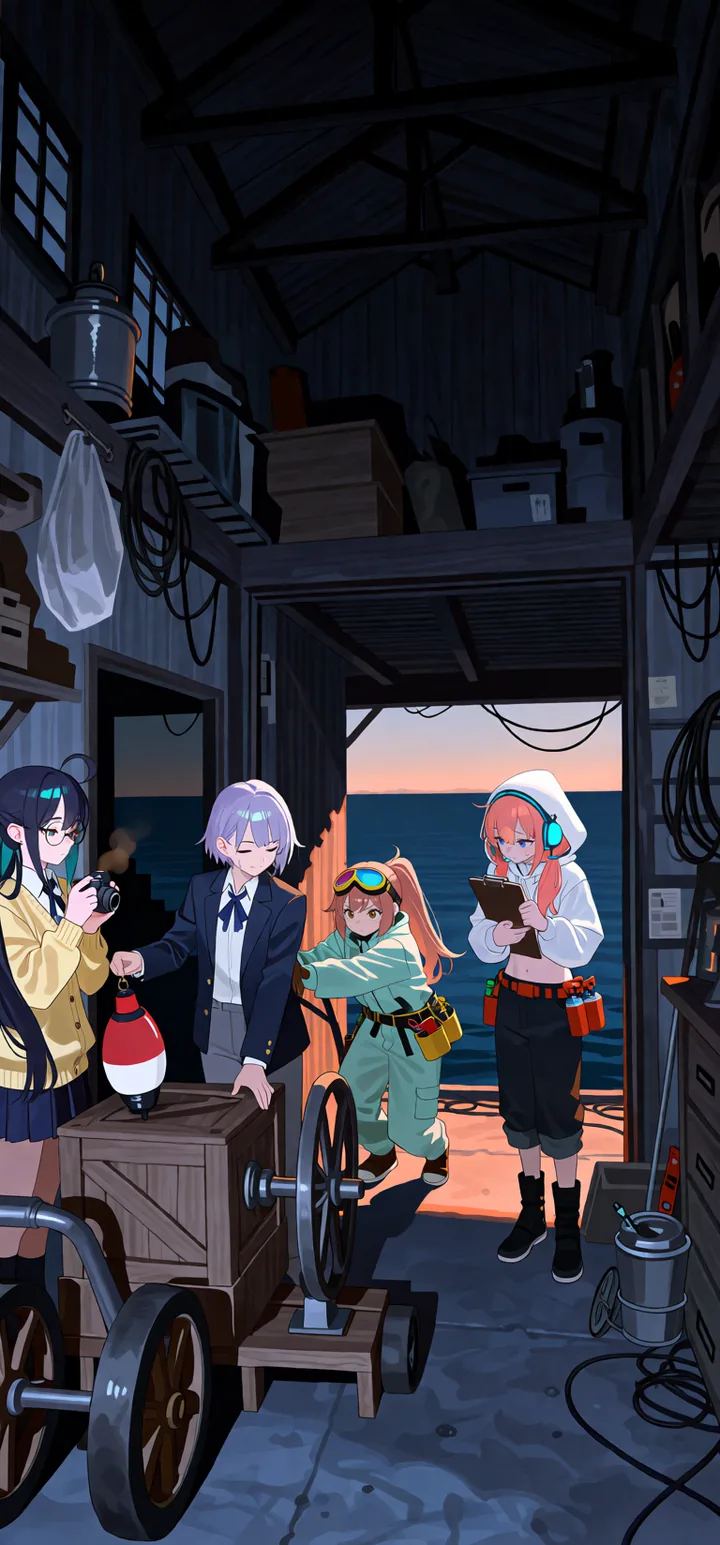
Cut 1 · SETUP
FocusComposition
The most-iterated layout: a wide, low-angle interior with the doorway as horizon, redone until all four silhouettes read at thumbnail size. This cut's style becomes the reference for every later cut.
See Cut 1 in the comic -
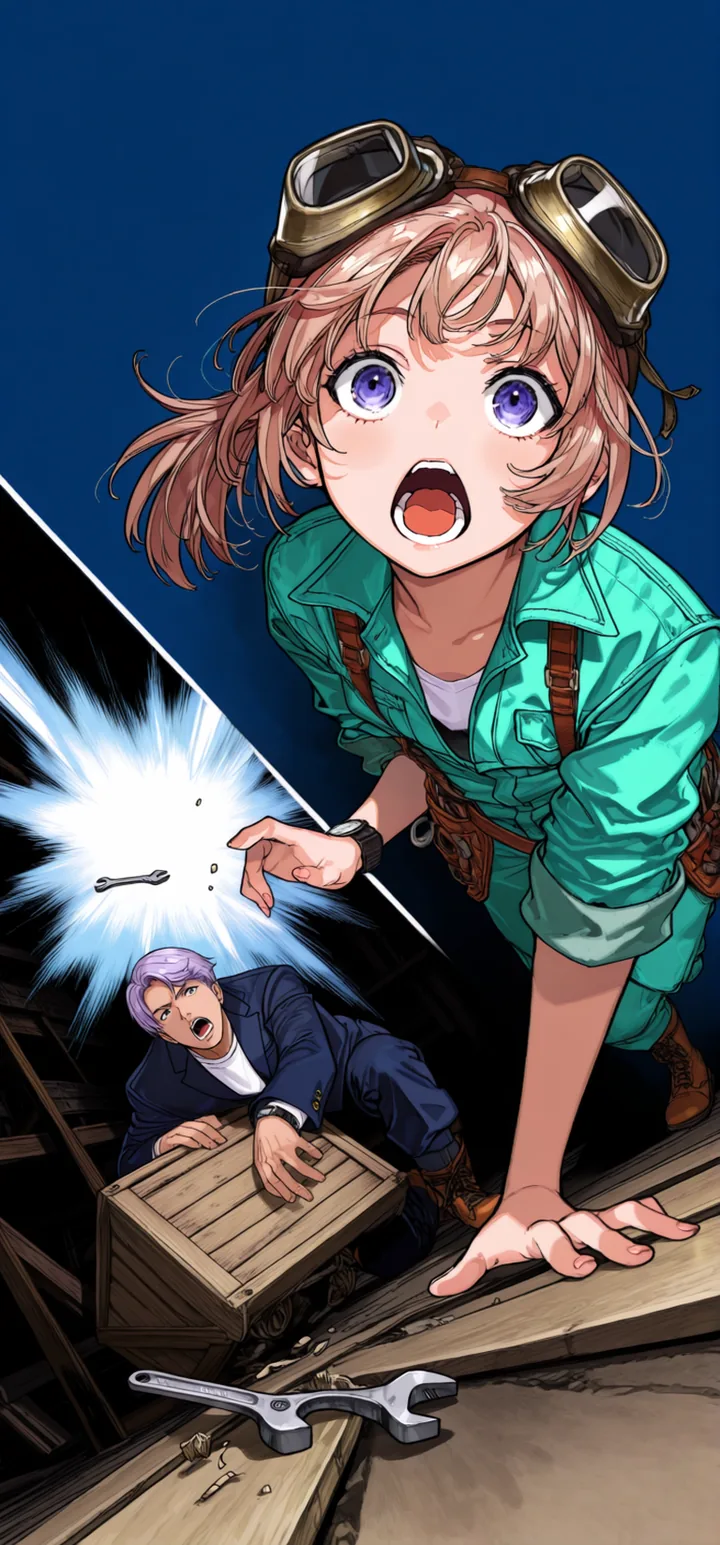
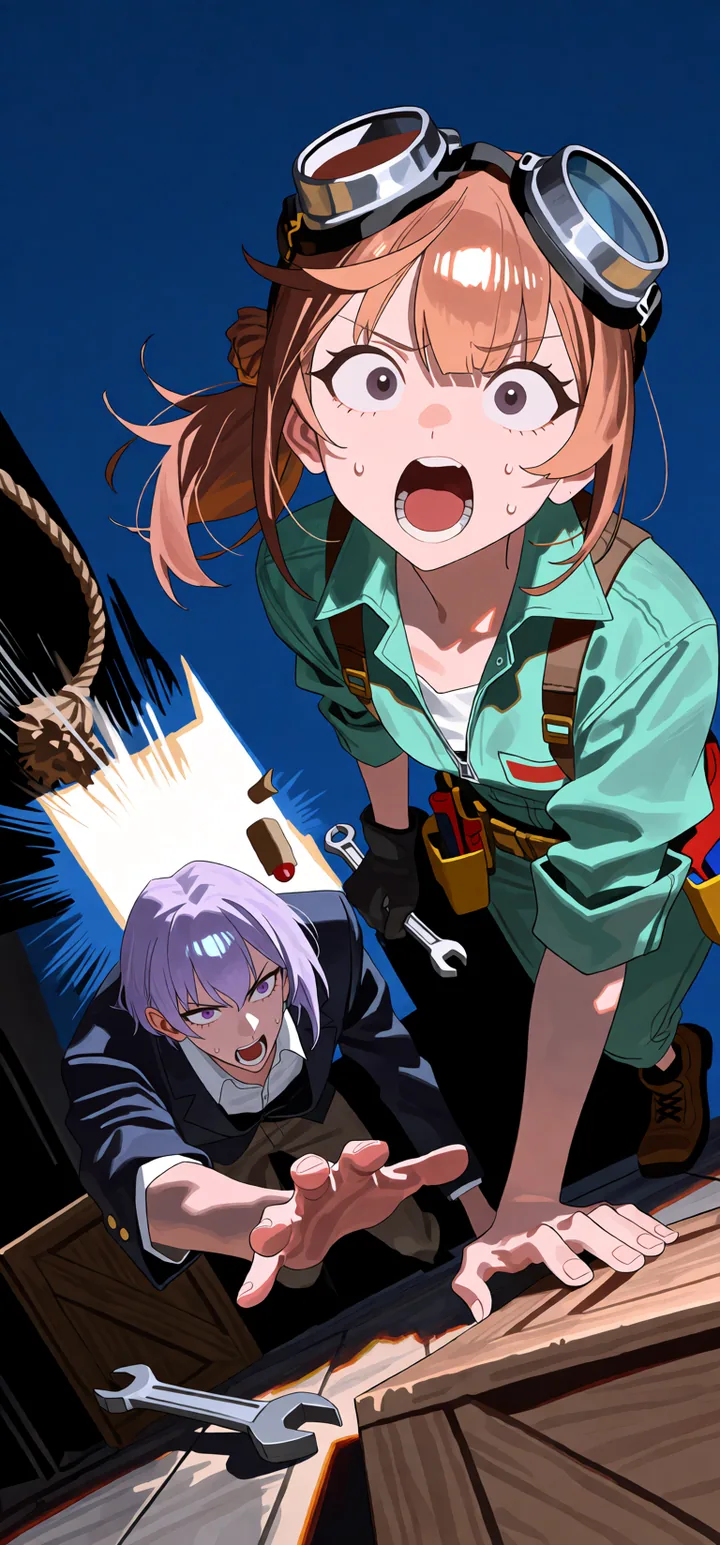
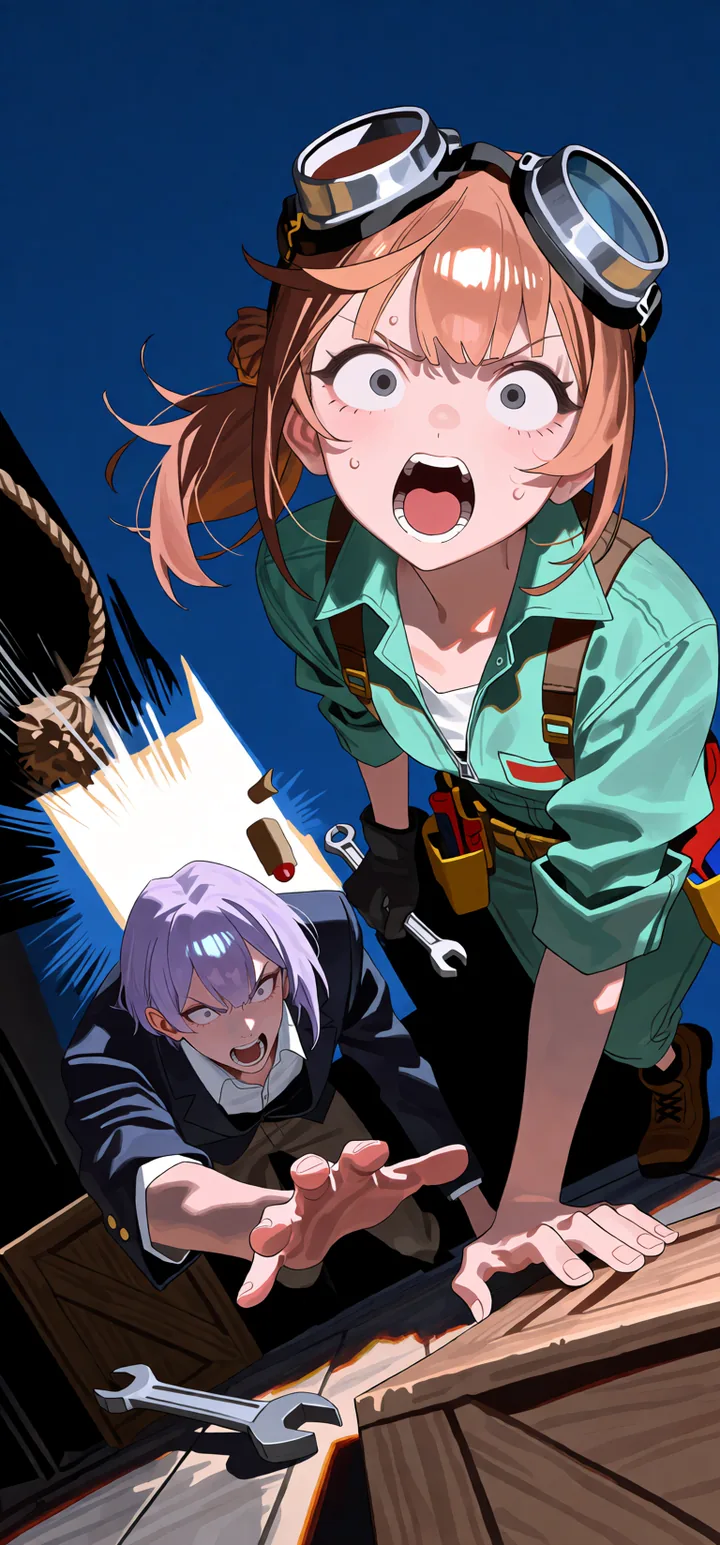
Cut 2 · INCIDENT
FocusStyle under motion
The Dutch angle and motion lines go into the sketch as guide strokes so the model doesn't straighten them. Noah's and Haru's faces are re-locked, since fast frames drift most. The SFX is lettered as a separate layer.
See Cut 2 in the comic -
Cut 3 · THREE REACTIONS
FocusFace separation & expressions
Built as three separate bust shots, each face with its own character lock, so no expression bleeds into a neighbour's. Expression targets: strain · cold focus · panic.
See Cut 3 in the comic -
Cut 4 · DECISION
FocusPose control in composition
Noah's floor-level pose is the hardest in the book, so composition uses a rough pose guide image, not text alone. Style is held at high adherence to keep the foot-against-doorframe shape; Rian's camera is inpainted afterwards.
See Cut 4 in the comic -
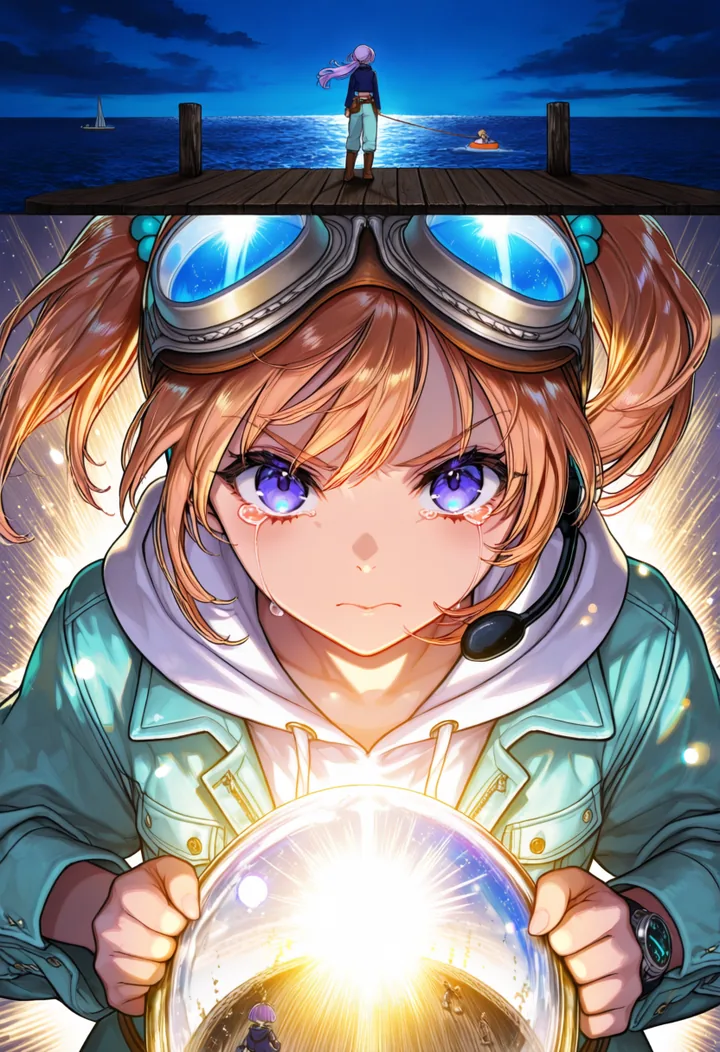
Cut 5 · CLIMAX
FocusConsistency through a lighting change
Juno's face lock is reinforced with the Cut 3 and Cut 4 outputs before the blue-to-gold light shift. Expression work is limited to eyes and jaw — tears and tension — so the moment isn't prettified.
See Cut 5 in the comic -
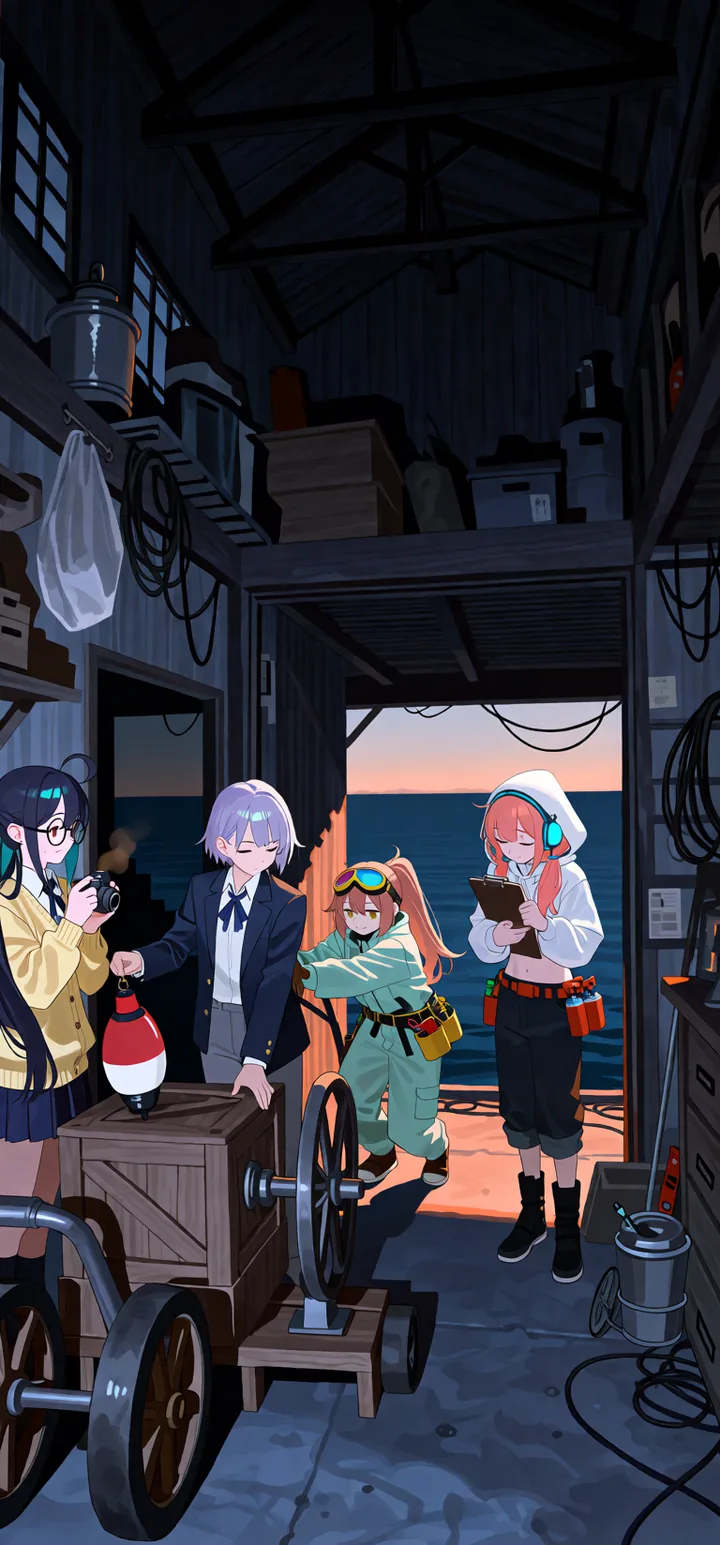
Cut 6 · RESOLUTION
FocusPanel assembly
The sea-side reverse angle is built from two generations — water-and-buoy foreground, dock-and-crew background. All four faces are locked and expression-enhanced one by one, composited under one gold grade; the chalkboard check and gulls go in last.
See Cut 6 in the comic
Changelog · v7
What we fixed in this version
The v6 images had two problems. Here is what went wrong and what we changed.
v6
What went wrong
-
Cut 1
After style transfer, the characters disappeared from the cut.
-
Cut 2
Faces were too small for the face stage to find, so it did nothing.
v7
What we changed
Characters drawn larger
Every character fills at least 40% of the frame height.
People named first
The first line of the style prompt names who is in frame.
One cast lock everywhere
The identical cast-lock text goes into every stage.
All six cuts regenerated
With these rules, all six cuts were made again from the start.
Every image on this page and on the comic page is a v7 regeneration.
Tools & stack
What it runs on
A small stack: images come from one remote desktop, the site is static files.
-
Runs on
ComfyUI
On a remote RTX desktop. Composition, style and face stages all run here.
-
Step 4 · Composition
anima
Turns the tag prompt into layout and figure placement. Output = A.
-
Step 5 · Style
Krea2 + flat-illustration LoRA
Repaints stage A as flat illustration at denoise 0.55. Output = S.
-
Step 6 · Faces
Face redraw
Detects faces and redraws each character's expression; a person reviews. Output = F.
-
Step 7 · Site
Static HTML
One shared stylesheet and a small script. Bubbles are HTML text, so they switch between EN and KO.
-
Projected
Time & cost
Per-cut time and GPU cost aren't measured well enough to publish yet. When they are, they'll be posted and marked approximate.
Next
Now read it the normal way
All six cuts of NOVA DOCK, finished and lettered.
Projected Founder $19 one-time pre-order — nothing is charged now.